



The human brain is the substrate for every thought, movement, perception, and emotion we have. The person trusted to operate on it carries that responsibility into every decision — long hours in the OR, precision demanded at every turn. But too much of a clinician’s day is still spent on everything around the care. From intraoperative judgment calls to the documentation and coordination that follow, that’s the daily calculus for a neurosurgeon — and AI now has an opportunity to improve how it all gets done.
Healthcare is a multi-trillion dollar industry largely built on workflows designed decades ago. Data lives on different systems, on paper, or in a surgeon’s head. The technology to capture clinical notes during surgery, interpret medical imaging, and forecast how a mass might evolve — that’s not science fiction. It’s possible. But possible and deployed are two very different things.
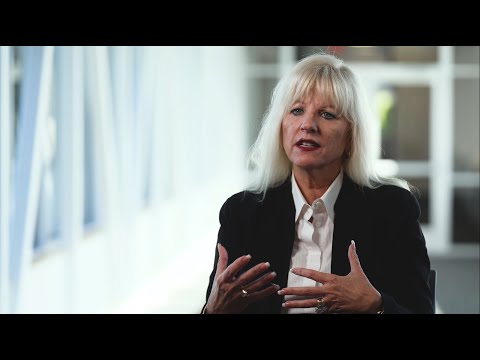
In this episode, AWS’s Randi Larsen sits down with Dr. Chetan Bettegowda, the Harvey Cushing Professor and Director of Neurosurgery at Johns Hopkins, and Dr. Diego Socolinsky, who leads generative AI for the Americas at AWS and has spent 25 years moving AI from research into production — including deep roots in medical imaging and computer vision.
They explore:
• Why the documentation burden is the single biggest thing pulling clinicians away from patients — and how AI is already changing that in Dr. Bettegowda’s practice today
• What it means to earn trust as a technologist in a clinical setting, where the consequences of errors aren’t cents on a transaction — they’re patient outcomes
• Why two patients with identical profiles can have wildly different surgical outcomes — and how AI may be able to help with forecasting
• The gap between shiny demos and real-world deployment — and what it actually takes to move AI from pilot to production in a regulated industry
Whether you’re a healthcare executive weighing your first AI investment, a technologist building for high-consequence environments, or a business leader trying to understand where AI belongs in workflows that were designed before the internet existed — this conversation is for you.
Subscribe to AWS: https://go.aws/subscribe
Create a free AWS account: https://go.aws/signup
Try AWS for free: https://go.aws/free
Connect with an expert: https://go.aws/contact
Explore more: https://go.aws/more
Next steps:
Explore on AWS in Analyst Research: https://go.aws/reports
Discover, deploy, and manage software that runs on AWS: https://go.aws/marketplace
Join the AWS Partner Network: https://go.aws/partners
Learn more on how Amazon builds and operates software: https://go.aws/library
Do you have technical AWS questions?
Ask the community of experts on AWS re:Post: https://go.aws/3lPaoPb
Why AWS?
Amazon Web Services is the world’s most comprehensive and broadly adopted cloud, enabling customers to build anything they can imagine. We offer the greatest choice of innovative cloud capabilities and expertise, on the most extensive global infrastructure with industry-leading security, reliability, and performance.
#AIinHealthcare #AWS #AmazonWebServices #CloudComputing