


How do you move an AI agent from a laptop to a Kubernetes cluster? Learn how to deploy AI agents and serve models using vLLM on Red Hat OpenShift.
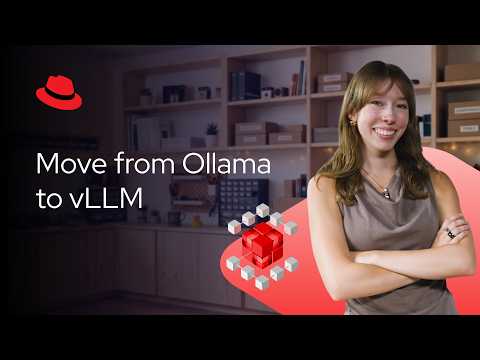
Transitioning AI agents from local development to cloud infrastructure requires shifting serving runtimes and containerizing workloads. In this episode of AgentOps Unlocked, we demonstrate how to take a local agent setup and run it side by side with a vLLM model endpoint on Red Hat OpenShift.
Join Grace Ableidinger to walk through building containers with Podman, pushing images to Quay, and deploying manifests directly to the cluster. Watch live tool execution as the cluster-deployed agent interacts with web search and GitHub using Model Context Protocol (MCP) servers, with chat logs monitored in Red Hat OpenShift AI. Finally, we highlight the critical operational gaps between basic cluster deployment and true enterprise containment.
00:18 Moving AI agents from laptop to production
00:42 What changes when moving to a cluster
01:22 Use Red Hat OpenShift AI to serve models at scale with vLLM
01:52 Using AI Hub to pull models from Hugging Face
02:33 Change .env config to switch to vLLM from Ollama
03:01 Containerizing the agent application
03:18 Building containers with Podman and pushing to Quay
03:52 Testing custom agent tools: web search and GitHub MCP
04:12 Monitoring chat logs in Red Hat OpenShift AI
04:29 Deployed versus production ready operational gaps
Don’t miss these open source AgentOps and Red Hat AI tools:
📂 Access the AgentOps GitHub repository → https://red.ht/github-agent-ops
🤖 Check out Red Hat AI’s Hugging Face → https://red.ht/rhai-hugging-face
💡 Learn more about AI inference → https://www.redhat.com/en/topics/ai/what-is-ai-inference?sc_cid=RHCTG0260000496899
Watch the previous episode of AgentOps Unlocked ""How to run local AI agents for free"" → https://youtu.be/i4A8jN41NNs
Want to learn more? Explore the full AgentOps Unlocked video series → https://www.youtube.com/playlist?list=PLEvHfaWT80U4
#AgentOps #AIAgents #OpenShift #vLLM #MCP #RedHat #OpenSource #Kubernetes